

Rebrick Resale

A closet in our house had filled up with LEGO sets over the years, a mix of complete builds, partial sets, and pieces that had been taken apart and rebuilt into something else. Most of our sets still had their instruction manuals and some still had the original boxes. We've been collecting sets since 2007 but as the kids got older, we were ready to clear space and decide what to do with all of these LEGO pieces and sets.
Let's Sell Them
The press has reported on the thriving LEGO resale market quite a bit in the past few years, so why not see if we can sell these old sets? We started by taking a few sets to a resale shop but the cash we earned typically came back at about half of the used value (sometimes less), reflecting how much inventory had built up during record breaking COVID sales a few years back.
We then listed a few sets on eBay and they sold quickly which made it clear that demand was not the main issue. Unfortunately, the time needed to list each set, pack it, and then cover eBay's fees were a big hit to the overall return on our investment. Through trial and error we realized buyers expect free or low cost shipping which also eats into profit.
Then we tried a small Shopify site for minifigures and some other small sets. We did pretty well and cleared out a big chunk of the collection but fees and overhead were still eating into what each sale would actually return.
At that point, we figured the real problem isn't selling, it's pricing. We enjoy all of these sets, so when faced with "selling for peanuts" or just keeping, we knew we'd lean towards keeping them. Each set had a different condition, so it was difficult to know what something could sell for and what would remain in our pocket after fees. You really have to be in the LEGO resale market day in and day out to have a pulse on demand.
Building Rebrick Resale
So, as any AI-powered product person would do, I ended up building a full ecommerce store around our specific problem so each step could be handled in one place. Rebrick Resale takes on the quick research for each set, helps us price it and list it, and cuts down a ton of time so the low margins don't feel as low.
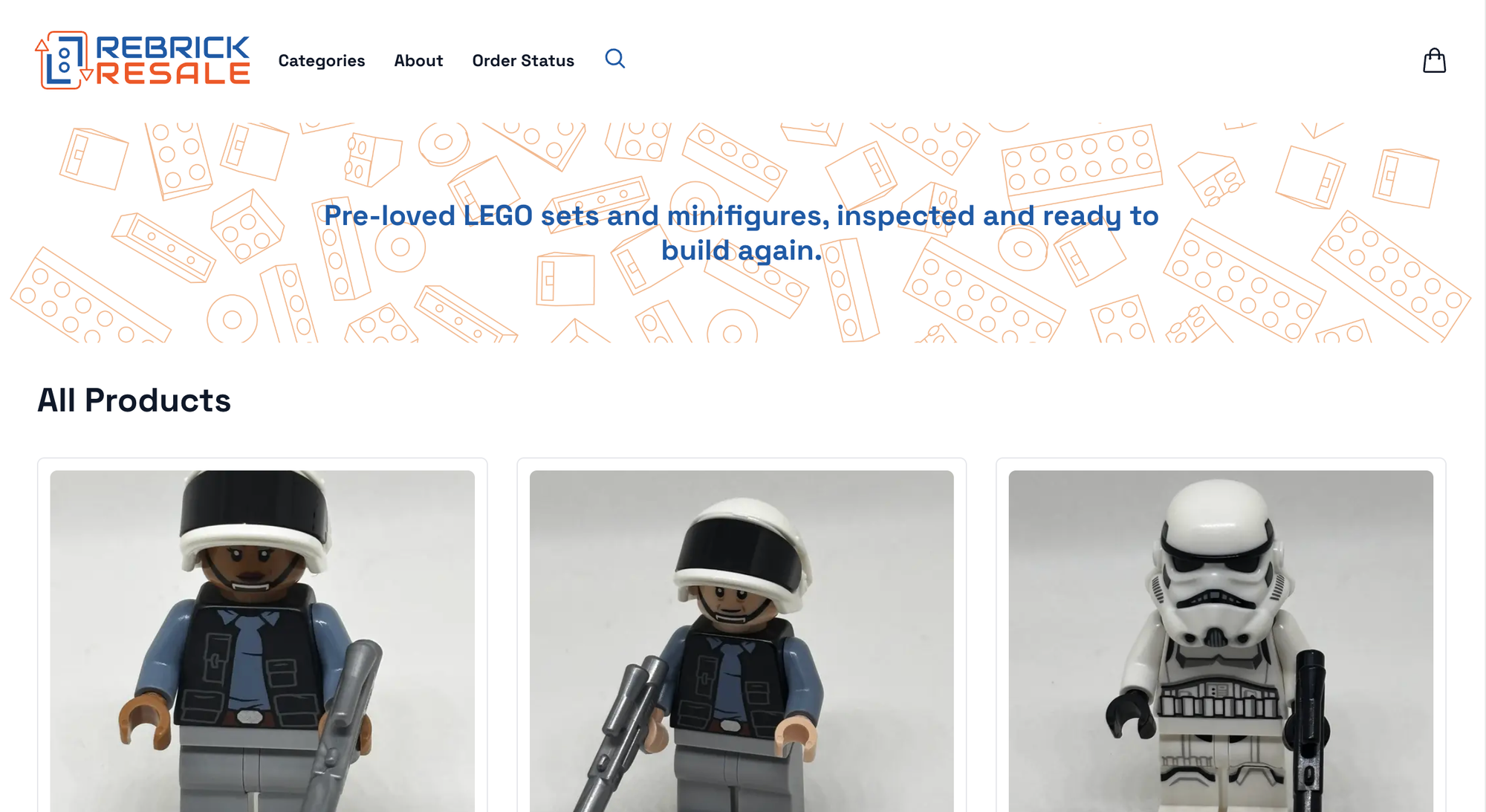
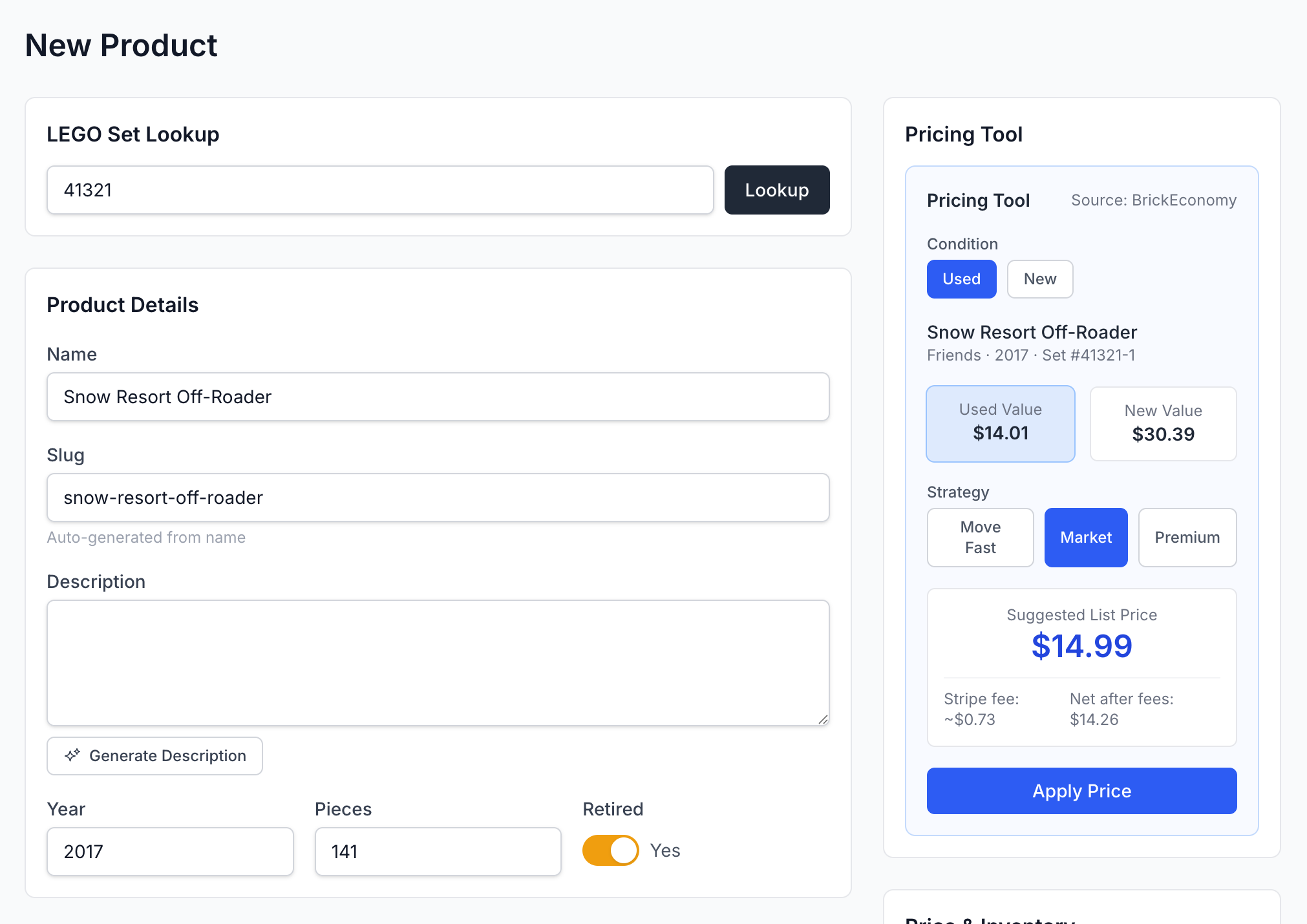
On the site, we enter each set with a set number and mark what is included: instructions, box, and whether the set is complete. Entering the set number pulls market data using our BrickEconomy account to provide a baseline for used value. From there, the admin app calculates pricing options based on how quickly we want the set to sell, with Stripe fees included in the calculation.
The store handles listings, checkout, shipping rules, and inventory updates. The database and images are stored in Supabase, and the site runs on Vercel, keeping everything in a small set of services we can manage. We kept the parts from our eBay experiment that worked: multiple photos, packing process, and postage label printing. We still have a traffic problem to solve but feel confident based on our experience with the Shopify site. The sets are already organized in a closet waiting to be sold and we can price more aggressively now that fees are lower.
We're still working through posting the original collection and already thinking about sourcing additional sets to leverage this new ecommerce site longer term. But right now, we're just focused on emptying that closet and saving the profits from Rebrick Resale for college. 🙏
If this project resonates, you have questions, or you want your own custom ecommerce site, just reach out!
